Do BCAAs Help With Weight Loss? What the Science Actually Says
| Do BCAAs burn fat? | No — they are amino acids, not fat burners, and they do not create a calorie deficit. |
| What they can do | Help protect lean muscle and support workout recovery while you eat in a deficit. |
| What still matters most | A calorie-aware diet, enough total protein, and regular movement. |
| Sensible use | A convenient daily add-on around training — consistency beats perfect timing. |
Search “BCAAs for weight loss” and you will find plenty of confident promises in both directions — miracle fat-burner on one side, useless waste of money on the other. The honest answer sits in between, and it becomes a lot clearer once you understand what branched-chain amino acids actually are and what job they do in the body. This guide walks through the evidence in plain language so you can decide whether they belong in your routine.
What are BCAAs, exactly?
BCAAs are three of the nine essential amino acids your body cannot make on its own: leucine, isoleucine and valine. “Essential” simply means you have to get them from food or supplements. They are called “branched-chain” because of their molecular shape, and they are found naturally in protein-rich foods like meat, eggs, dairy, fish and soy. The International Society of Sports Nutrition position stand on protein and exercise sets out how much total protein active people need and where isolated amino acids sit inside that total (J Int Soc Sports Nutr, 2017).
Among the three, leucine gets the most attention because it plays a leading role in signalling muscle-protein synthesis — the process your body uses to build and repair muscle tissue. That is why BCAA blends, including the classic 2:1:1 ratio, are weighted toward leucine.
Do BCAAs help you lose weight?
Here is the part worth being clear-eyed about: BCAAs do not directly cause fat loss. They contain a small number of calories, they do not switch on some hidden fat-burning pathway, and no amount of amino acids will out-run a diet that supplies more energy than you use. Weight change still comes down to a sustained calorie deficit — taking in less energy than you burn over time. A widely cited review argued directly that BCAAs alone cannot maximally stimulate muscle protein synthesis in humans, because building muscle needs the full set of essential amino acids rather than three of them (J Int Soc Sports Nutr, 2017).
So why do BCAAs come up in weight-loss conversations at all? Because losing weight well is not only about the number on the scale — it is about what you lose. When people cut calories, some of the weight that comes off can be lean muscle rather than fat. Preserving muscle while you diet helps keep your metabolism and strength up, and this is where amino-acid intake plays a genuine supporting role.
How BCAAs may support a weight-loss routine
Think of BCAAs as a support act, not the headliner. A few reasonable, research-backed ways they can help an active, calorie-aware routine: The clearest documented benefit is recovery rather than fat loss: a systematic review and meta-analysis with meta-regression found BCAA supplementation attenuated muscle-soreness and muscle-damage markers after exercise-induced muscle damage (Sports Med Open, 2024). Where they fit best is inside an already-solid daily structure, of the kind set out in our guide to a morning routine for weight loss.
1. Protecting lean muscle during a deficit. Adequate amino-acid intake, and leucine in particular, helps signal muscle maintenance. When you are eating fewer calories, that support can matter more, not less.
2. Supporting workout recovery. BCAAs are among the amino acids most associated with reduced training soreness and recovery support in some studies. Feeling less wrecked after a session makes it easier to stay consistent — and consistency is what actually drives results.
3. A low-calorie, convenient habit. A flavoured BCAA drink can be an easy, near-zero-sugar way to make water more appealing between meals or during a workout, without the calories of a snack or sugary sports drink.
Support your active routine with one simple scoop
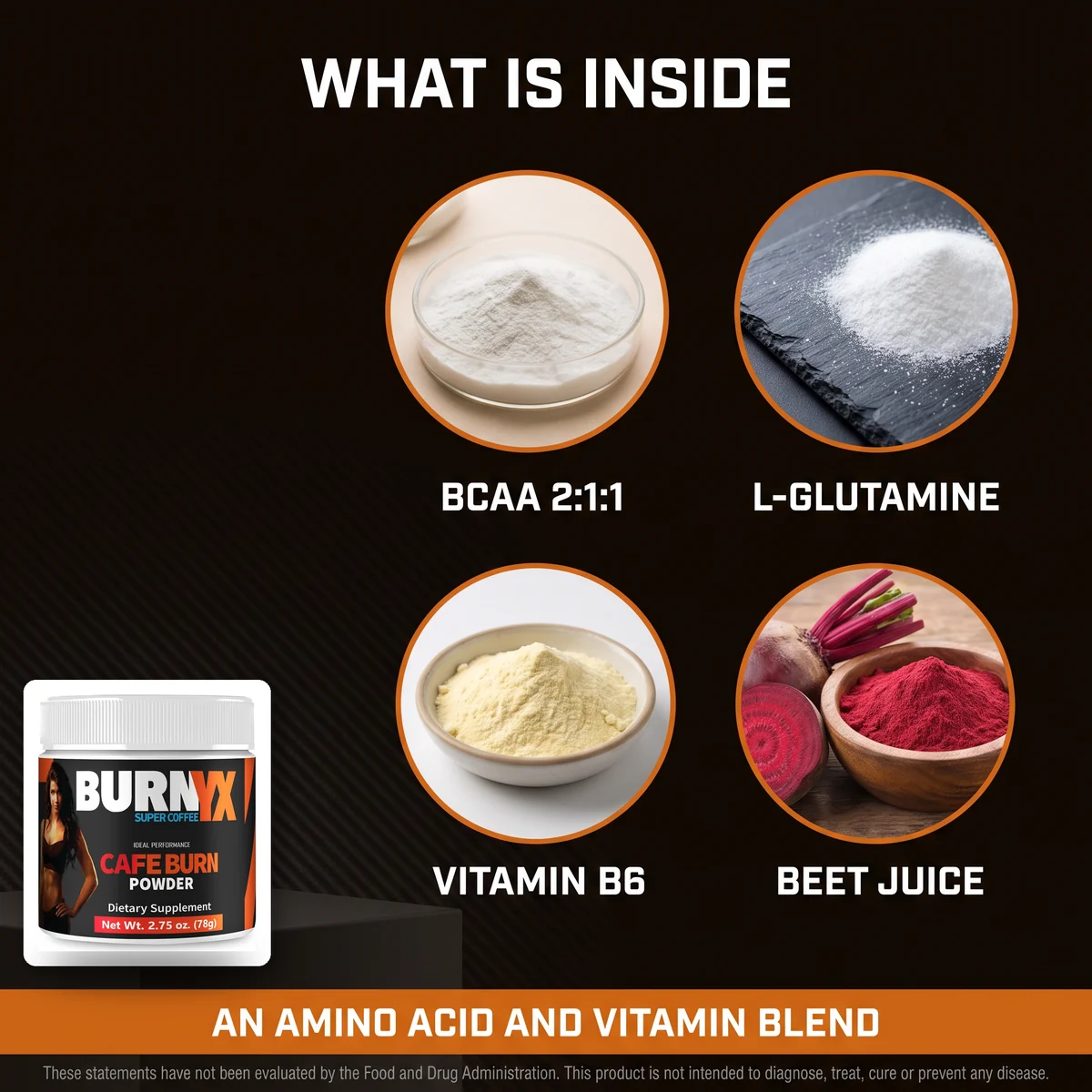
Burnyx pairs a 2:1:1 BCAA blend with L-glutamine and Vitamin B6 in a once-daily super-coffee powder — built to support energy, lean-muscle recovery and an active weight-management routine. Protected by a 60-day guarantee.
See Burnyx PackagesBCAAs vs. whole protein — which is better?
This is the question that separates hype from good practice. Complete protein sources — whole foods and quality protein powders — supply all nine essential amino acids, not just three. For most people trying to lose fat while keeping muscle, hitting an adequate total daily protein target is the priority, and it also helps with fullness and appetite control. A meta-analysis of randomised trials in resistance-trained men reached a similar conclusion on soreness and damage markers, again without reporting a fat-loss effect (Nutrients, 2021).
BCAAs are best understood as a convenient extra, not a substitute. They shine when a full protein serving is not practical — sipped during a fasted morning walk, mid-workout, or simply as an easy daily habit. If your overall protein intake is already high, extra BCAAs add less on their own. If it is patchy, they can help fill gaps around training.
How to use BCAAs for weight management
If you decide to add them, keep it simple: No amino acid will restart a stall on its own, which is the subject of our guide to how to break a weight loss plateau.
Dose: Typical BCAA servings fall in the 1.5–6 g range per drink; follow the directions on your product’s label. More is not automatically better.
Timing: Around your workout is the most common choice, but the truth is that consistency beats perfect timing. A single daily scoop at a time you will remember is more effective than a fancy schedule you abandon in a week.
Pair it with the fundamentals: A calorie-aware diet, plenty of protein, regular movement and sleep do the heavy lifting. BCAAs sit on top of that foundation — they do not replace it.
Who should be cautious
Branched-chain amino acids are generally well tolerated by healthy adults at normal supplement doses. That said, if you are pregnant, nursing, under 18, managing a health condition, taking medication or under a physician’s care, talk to your healthcare professional before starting any new supplement. Nothing in this article is medical advice.
The bottom line
BCAAs are not a shortcut to weight loss, and any product that promises they melt fat is overselling. What they can realistically do is support lean muscle and recovery while you do the real work of eating in a sensible deficit and staying active. Used that way — as a convenient, consistent daily habit rather than a magic bullet — they can be a genuinely useful part of a weight-management routine. If progress has stopped despite doing everything right, the likelier explanations are in our guides to what causes a slow metabolism and why you cannot lose weight even when eating healthy.
Frequently asked questions
Do BCAAs directly burn fat?
No. BCAAs are amino acids, not fat burners. They do not create a calorie deficit on their own. What they can do is support lean-muscle recovery and workout effort, which help you keep training and protect muscle while you eat in a deficit. Weight change still comes from calories in versus calories out.
When is the best time to take BCAAs for weight management?
Most people take them around training — before or during a workout — or simply once a day at a time that is easy to remember. Consistency matters more than perfect timing. A daily scoop mixed with water is an easy way to stay consistent.
Are BCAAs better than whole protein for losing weight?
For most people, adequate total daily protein from whole foods and protein powders is the priority, because complete protein supplies all nine essential amino acids. BCAAs are a convenient, low-calorie add-on that fits between meals or around workouts — not a replacement for protein or a balanced diet.
Do I still need a calorie deficit if I take BCAAs?
Yes. No supplement removes the need for an energy deficit. BCAAs are best viewed as support for an active, calorie-aware routine, working alongside sensible eating and regular movement rather than instead of them.
Are BCAAs safe to take every day?
Branched-chain amino acids are generally well tolerated by healthy adults at typical supplement doses. As with any supplement, if you are pregnant, nursing, under 18, taking medication or under a physician’s care, consult your healthcare professional before use.
References
- “International Society of Sports Nutrition Position Stand: protein and exercise.” (J Int Soc Sports Nutr, 2017)
- Wolfe RR. “Branched-chain amino acids and muscle protein synthesis in humans: myth or reality?” (J Int Soc Sports Nutr, 2017)
- “Attenuating Muscle Damage Biomarkers and Muscle Soreness After an Exercise-Induced Muscle Damage with Branched-Chain Amino Acid (BCAA) Supplementation: A Systematic Review and Meta-analysis with Meta-regression.” (Sports Med Open, 2024)
- “Does Branched-Chain Amino Acids (BCAAs) Supplementation Attenuate Muscle Damage Markers and Soreness after Resistance Exercise in Trained Males? A Meta-Analysis of Randomized Controlled Trials.” (Nutrients, 2021)
- NIH Office of Dietary Supplements — Dietary Supplements for Exercise and Athletic Performance
- Wolfe RR. “Branched-chain amino acids and muscle protein synthesis in humans: myth or reality?” Journal of the International Society of Sports Nutrition. 2017;14:30.
- Jäger R, et al. “International Society of Sports Nutrition Position Stand: protein and exercise.” Journal of the International Society of Sports Nutrition. 2017;14:20.
- Harvard T.H. Chan School of Public Health, The Nutrition Source. “Protein.” hsph.harvard.edu/nutritionsource
- U.S. Food & Drug Administration. “Dietary Supplements.” fda.gov
† These statements have not been evaluated by the Food and Drug Administration. This product is not intended to diagnose, treat, cure or prevent any disease. This article is for general educational purposes only and is not medical advice; consult a qualified professional about your individual needs.